Complete Guide To Fire Classes In UK
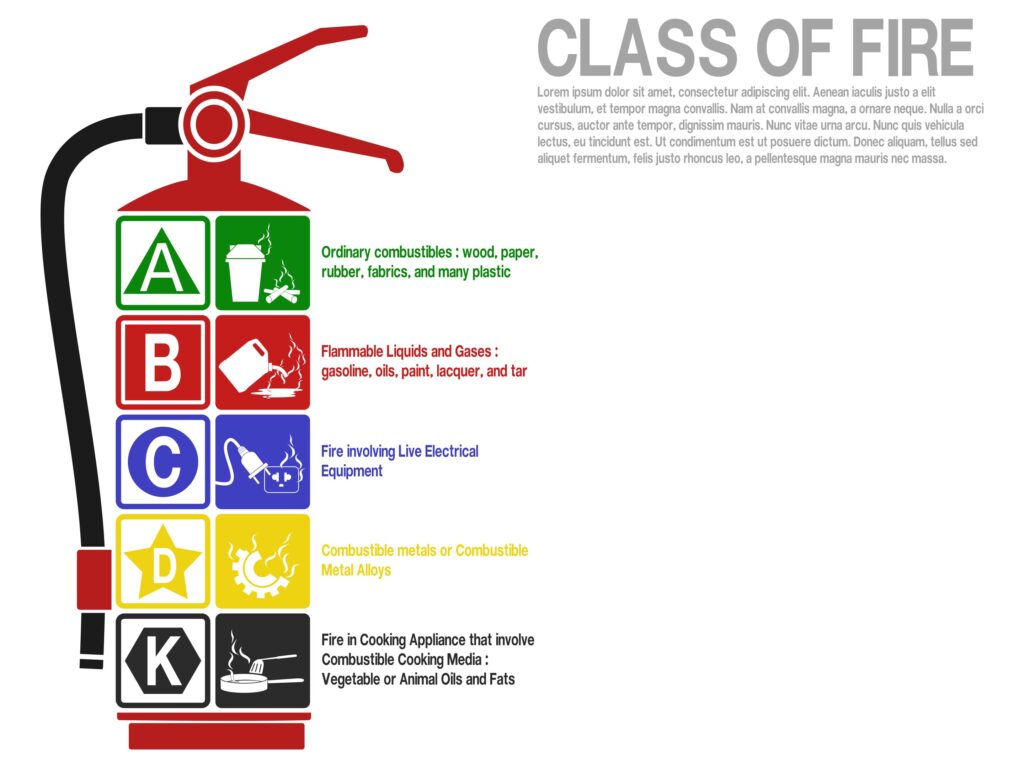
Classes of fire are defined by the type of fuel that is burning. In the UK, the established fire classes include Class A for combustible materials, Class B for flammable liquids, Class C for flammable gases, Class D for combustible metals and Class F for cooking oils and fats. Live electrical equipment presents an additional hazard, while BS ISO 3941:2026 has introduced Class L for lithium-ion battery fires.
The material involved influences how quickly a fire spreads, the hazards it produces and the most appropriate method for controlling it. Understanding the different classes of fire is therefore an essential part of any fire safety strategy.
Using the wrong fire extinguisher can be ineffective and, in some situations, cause the fire to spread or put the user at risk. Water sprayed onto hot cooking oil, for example, can cause the flames to flare up violently. With live electrical equipment, an inappropriate extinguishing agent can also pose a risk of electric shock.
This guide explains the main fire types recognised in the UK, where they may occur and the extinguishing methods typically associated with each risk. It also covers electrical fire risks, the new Class L for lithium-ion batteries and the importance of matching fire protection to the findings of a fire risk assessment.
What Are The Different Classes Of Fire?
Fire classification is determined primarily by the type of fuel involved. The class is defined by the material that is burning, rather than the size or temperature of the fire or the building in which it started.
Fire classifications vary between countries. Under BS EN 2, the five established classes used in the UK are Class A, Class B, Class C, Class D and Class F. The British Standards Institution identifies BS EN 2:1992 as the current edition of the standard.
Fires involving live electrical equipment are treated separately because of the risk of electric shock, but they do not constitute an official Class E under BS EN 2. BS ISO 3941:2026 has also introduced Class L for fires involving lithium-ion batteries, meaning that the newer standard now recognises six classes: A, B, C, D, F and L.
Why Fire Classification Matters For Fire Safety
Each of the different fire classes requires a different approach. A water extinguisher may be effective on common solid materials, but should not automatically be used on flammable liquids, combustible metals, cooking oil or live electrical equipment, as the wrong choice can cause more harm.
Classification helps identify the right extinguishers and other fire protection measures for each area of a building. An office may have Class A risks from paper, furniture and waste, as well as electrical fire risks from computers. Commercial kitchens present Class F risks, whilst workshops, laboratories and chemical plants may contain flammable liquids, gases or metals.
In England and Wales, the Regulatory Reform (Fire Safety) Order 2005 requires the Responsible Person to assess fire risks and, where necessary, provide appropriate detection and fire-fighting equipment. The obligation is not simply to purchase a set number of fire extinguishers: their selection must follow a fire risk assessment that considers the activities, materials, layout and people on the premises. Staff should also receive suitable fire safety training, including guidance on recognising fire classes and responding safely.
Class A Fires: Combustible Materials
Class A fires involve solid combustible materials that typically produce embers as they burn. Common examples include wood, paper, cardboard, textiles, furniture and certain plastics.
Class A is often considered the most common type of fire because combustible materials are present in most buildings. These fires occur in offices, schools, shops, warehouses, hospitals, industrial premises and residential buildings, where paper, packaging, furniture and waste can all fuel the flames.
A water extinguisher is commonly suitable for Class A fires. Some foam extinguishers, water mist extinguishers, dry powder extinguishers and wet chemical models may also carry a Class A rating. Always check the classification printed on the equipment.
Prevention involves good organisation, regular waste removal and careful storage. The presence of ignition sources near packaging, fabrics or other solid materials can cause a small fire to spread quickly.
Class B Fires: Flammable Liquids
Class B fires involve flammable liquids and solid substances that can become liquid, such as petrol, solvents, alcohol, oil-based paints and certain cleaning products. These materials can release flammable vapours that ignite on contact with a flame, spark or hot surface.
Class B risks are particularly relevant in workshops, garages, maintenance areas, printing facilities, chemical stores, industrial settings and some construction sites. In addition to flames, certain products can generate intense heat and toxic smoke.
Foam, carbon dioxide and certain dry powder extinguishers may be suitable, depending on the liquid and the scale of the fire risk. Foam forms a layer over the fuel, helping to smother the flames and separate flammable vapours from the air. Carbon dioxide leaves no residue and may be suitable for some small Class B fires, but it has limited cooling capacity.
A water jet must not be used on flammable liquids, as it can spread the fuel and make the fire worse. Cooking oils and fats should also not be treated as Class B fires: they fall under Class F.
Class C Fires: Flammable Gases
Class C fires involve flammable gases such as propane, butane, methane, acetylene and natural gas. These gases can form explosive atmospheres and ignite from a relatively small energy source.
These risks are found in kitchens, industrial facilities, laboratories, workshops, cylinder storage areas and manufacturing processes. Gases must be stored in sealed containers, under appropriate conditions and away from sources of ignition.
In fires involving flammable gases, the priority is usually to shut off the gas supply, provided this can be done safely by a competent person. Extinguishing the flame while gas continues to escape may allow the fuel to accumulate and create an explosion risk.
Class C dry powder fire extinguishers may be suitable for these risks. However, gas fires require specific procedures, and no one should approach valves or cylinders where there is a risk of explosion.
Class D Fires: Combustible Metals
Class D fires involve combustible or flammable metals, including magnesium, sodium, potassium and metallic lithium. Metal filings, shavings and dust may ignite more easily than a solid piece of the same material.
These metal fires are most likely to occur in laboratories, factories, foundries, aerospace facilities and other industrial environments. They can reach very high temperatures and react dangerously with conventional fire-extinguishing agents.
Water, foam, CO₂ and standard ABC powders should not be regarded as universal solutions for Class D fires. Certain metals react with water and may release flammable gases or cause the fire to intensify violently.
Specialised powder extinguishers compatible with the specific metal are required. Powders suitable for magnesium or sodium, for example, are not necessarily interchangeable with products intended for metallic lithium. The assessment must take into account the metal, its form, the quantity and the industrial process involved.
Electrical Fire Risks And The “Class E” Misconception
The term ‘Class E’ still appears in some guides, but it does not represent an official fire class under BS EN 2. Electricity is a source of ignition and an additional hazard, not a fuel. Once the power supply has been disconnected, the class is determined by the material that continues to burn.
Electrical fire risks may arise from computers, servers, kitchen equipment, machinery, distribution boards and cables. Electrical fires caused by faulty wiring, damaged connections, overloading or overheating can damage equipment and place occupants at risk.
CO₂ is often chosen for electrical fires because it is non-conductive under normal conditions of use and leaves no residue that could damage sensitive equipment. Some dry powder extinguishers may also be suitable, although the powder creates residue, impairs visibility and is not generally preferred in enclosed spaces.
Conventional water or foam extinguishers must not be used on live electrical equipment. Some water-based extinguishers are specifically tested for use near certain electrical hazards, but this capability must be expressly stated by the manufacturer. General rules should never replace the product rating or a professional fire risk assessment.
Whenever possible and safe, the power supply should be isolated. The priority, however, remains to evacuate, raise the alarm and contact the emergency services.
Class F Fires: Cooking Oils And Fats
Class F fires involve heated cooking oils and fats, typically in deep-fat fryers, frying pans and other cooking equipment. They pose a significant risk in restaurants, hotels, takeaways, canteens, hospitals, schools and other commercial kitchens.
Cooking oils reach high temperatures and can reignite if only superficially smothered. Adding water can generate steam almost instantly, causing burning oil to be projected and the fire to spread rapidly.
A Class F wet chemical extinguisher is normally selected for this type of risk. The agent helps to cool the oil and forms a layer that limits contact with oxygen. The equipment must be suitably rated for the capacity of the deep-fat fryer and the conditions in the kitchen.
A fire blanket may be suitable for small Class F fires confined to a pan or other small container, provided it can be used without approaching the flames or compromising the escape route. It is not a substitute for suitable fire protection where the risk involves deep-fat fryers, high-capacity equipment, extraction systems or accumulated grease.
In commercial kitchens, fire protection may combine wet chemical extinguishers, fire blankets, power isolation and automatic suppression systems. LJM provides kitchen fire suppression solutions tailored to the cooking equipment, ventilation and operational needs of each kitchen.
Class L Fires: The New Lithium-Ion Classification
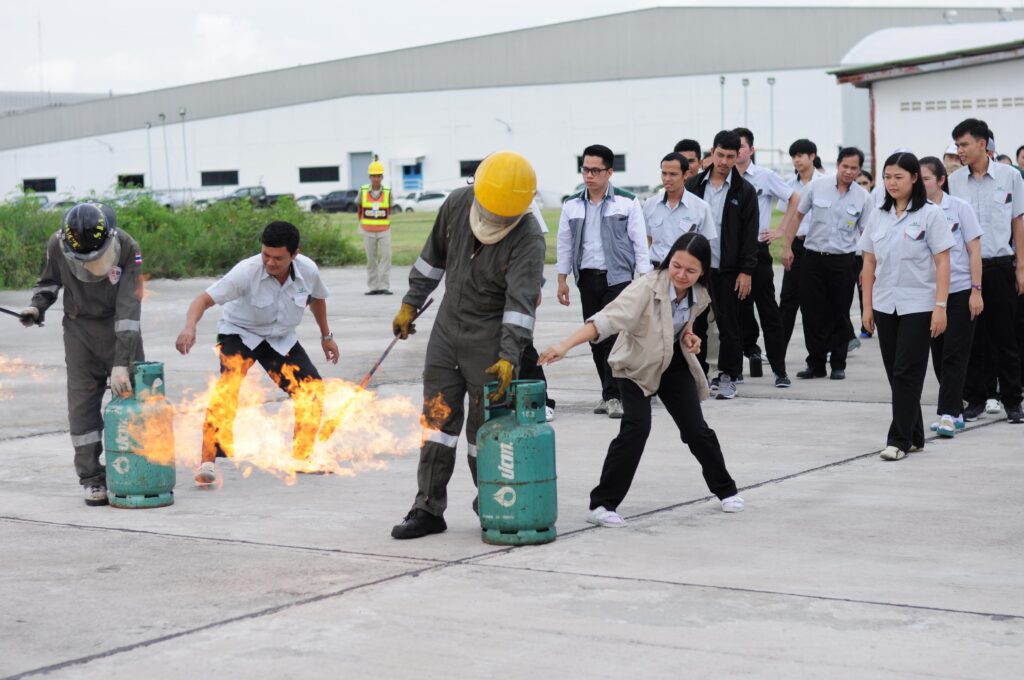
BS ISO 3941:2026 introduced Class L for fires involving lithium-ion cells and batteries where metallic lithium is not the burning fuel. This new classification recognises the hazards of thermal runaway, including rapid heating, gas release, fire propagation between cells and re-ignition.
Lithium-ion batteries are found in laptops, mobile phones, power tools, e-bikes, e-scooters, vehicles, forklift trucks and energy storage systems. The fire risk increases when a battery is damaged, modified, overheated or charged with incompatible equipment. UK government guidance for premises managers identifies charging and storage as important factors to address in the risk assessment.
Class L should not be confused with Class D. The former refers to electrochemical energy in lithium-ion batteries; the latter may include combustible metallic lithium.
Class L has not yet been incorporated into the BS EN 3 classification system for portable fire extinguishers. Products marketed for battery fires must therefore be assessed against the manufacturer’s test evidence, instructions and limitations, as well as the battery’s size and technology. A fire extinguisher intended for a portable device should not be assumed to provide adequate protection for an electric vehicle or large energy storage system.
Matching Extinguishers To Fire Types
The table below summarises the agents commonly considered for each type of fire. Always check the classification and rating printed on the fire extinguisher.
| Risk | Common materials | Agents normally considered | Do not use as a general solution |
|---|---|---|---|
| Class A | Wood, paper, cardboard and textiles | Water, water mist extinguishers, foam and dry powder where appropriately rated for Class A | CO₂ as the sole protection for solid materials |
| Class B | Petrol, solvents, paints and alcohol | Foam, CO₂ or dry powder where appropriately rated for Class B | High-pressure water jets |
| Class C | Propane, butane, methane and acetylene | Class C dry powder, with the gas supply isolated where this can be done safely | Water, foam or extinguishing the flames without controlling the gas supply |
| Class D | Magnesium, sodium, potassium and metallic lithium | Specialised powder compatible with the specific metal | Water, foam, CO₂ or standard ABC powder |
| Live electrical equipment | Servers, machinery, cables and distribution boards | CO₂ or another agent expressly approved for the electrical risk | Conventional water or foam |
| Class F | Cooking oils and fats | A wet chemical extinguisher; a fire blanket in small, suitable situations | Water, CO₂, ABC powder or conventional foam |
| Class L | Lithium-ion cells and batteries | A specific control and cooling strategy based on testing and the manufacturer’s instructions | Do not assume that a conventional extinguisher is suitable for every battery fire |
Fire extinguishers are colour-coded for easy identification in the UK: red for water, cream for foam, blue for dry powder, black for carbon dioxide and yellow for wet chemical. The colour band helps identify the extinguishing agent, but users must still check the label, fire classification and rating before use.
How A Fire Risk Assessment Determines Fire Protection
There is no single combination of fire extinguishers suitable for every building. The correct fire protection depends on the combustible materials present, work processes, sources of ignition, size and layout of the premises, occupants and escape routes.
A fire risk assessment should identify the hazards and people at risk before defining measures to reduce the likelihood and consequences of a fire. It should consider detection, alarms, emergency lighting, evacuation, containment, suppression and maintenance, rather than treating portable extinguishers in isolation.
In larger or higher-risk premises, fire protection may combine portable extinguishers with sprinklers, fire dampers, dry risers, hydrants, compartmentation and automatic suppression systems. Fire extinguishers should be selected for the identified risks and normally positioned visibly along escape routes, preferably near exits.
Portable fire extinguishers are intended only for small fires in their early stages and should be used only by someone who is trained and can maintain a safe escape route. If there is heavy smoke, the fire begins to spread rapidly or there is any doubt about personal safety, get out, stay out and call 999.
Why Choose LJM Fire Solutions?
LJM Fire Solutions brings over 40 years of experience to commercial and industrial fire protection across the North East and the wider UK. Its engineers assess each building, its activities and identified fire risks before recommending suitable equipment or systems.
Services include the installation, maintenance and repair of fire extinguishers, sprinklers, fire dampers, dry risers, hydrants and specialised suppression systems. By considering these measures as part of an integrated fire protection strategy, LJM helps clients maintain reliable systems suited to their premises and relevant regulatory requirements.
Summary
Understanding fire classes explains why different fuels require different control methods. Class A covers combustible solid materials; Class B, flammable liquids; Class C, flammable gases; Class D, combustible metals; and Class F, cooking oils and fats. Live electrical equipment presents an additional hazard but is not an official Class E, while BS ISO 3941:2026 has introduced Class L for lithium-ion battery fires.
Fire classification is only the starting point. The selection of fire extinguishers and other fire protection systems must follow a suitable fire risk assessment that considers the premises, materials, activities and people at risk.
For advice on assessing your premises or installing and maintaining suitable fire protection systems, contact LJM Fire Solutions.
Fire Classes FAQs
What Are The 5 Classes Of Fire?
The five established classes under BS EN 2 are Class A, B, C, D and F. Fires involving live electrical equipment are treated separately and do not constitute an official Class E. BS ISO 3941:2026 has since introduced Class L for lithium-ion battery fires.
What Are Class A, Class B, Class C And Class D Fires?
Class A covers combustible solid materials such as wood, paper and textiles. Class B covers flammable liquids, Class C covers flammable gases and Class D covers combustible metals. Each type of fire requires a suitable extinguishing method.
What Are The 4 Classes Of Fire And Their Meaning?
The original BS EN 2 system covered four classes: A for solid materials, B for flammable liquids, C for flammable gases and D for combustible metals. Class F was later added for cooking oils and fats. Current UK guidance should therefore not be limited to the original four classes, while Class L is now recognised separately under BS ISO 3941:2026.
What Are The 4 Types Of Fire Extinguishers?
There are more than four types of fire extinguisher in the UK. Common options include water, foam, dry powder, carbon dioxide and wet chemical extinguishers, as well as water mist and specialised Class D powders. The right extinguisher depends on the fire classes identified in the premises’ fire risk assessment.
Is An Electrical Fire Class E In The UK?
No. Class E is not an official fire class under BS EN 2. Live electrical equipment presents an additional electric-shock hazard, but once the power supply has been isolated, the fire is classified by the material that continues to burn.
Which Extinguisher Should Be Used On A Class F Fire?
A wet chemical extinguisher with an appropriate F rating is normally used for Class F fires involving cooking oils and fats. A fire blanket may be suitable for a small fire confined to a pan or similar container, but only when it can be used without approaching the flames or compromising the escape route.
Enquiry

Let’s talk or fill in our enquiry form today
Have you found what your looking for? Or simply require more information? Don’t hesitate to get in touch today or fill in our enquiry form and we can arrange a call back.
Get in touch